
Pilot live now · 16 students in class
Tech in Schools
Real robots. Real skills.
TIS is an applied STEM and robotics track for middle and high school students, designed and taught by Overflow Robotics — the student team that placed 5th in the world at the 2026 MATE ROV World Championship. Not a course: a full applied-engineering journey — inside partner schools, or from home for any student.
Taught by Overflow Robotics — 5th in the world at MATE ROV 2026. Already enrolled? TIS portal log in
TIS by the numbers
Our first pilot, live in class.
One school, one cohort, sixteen students building real robots — the start of something much bigger.
1
Partner school
and counting
16
Students enrolled
in our first pilot
1
Pilot cohort
running now
46
Contact hours
per student, Module 1
Inside the classroom
TIS in action.
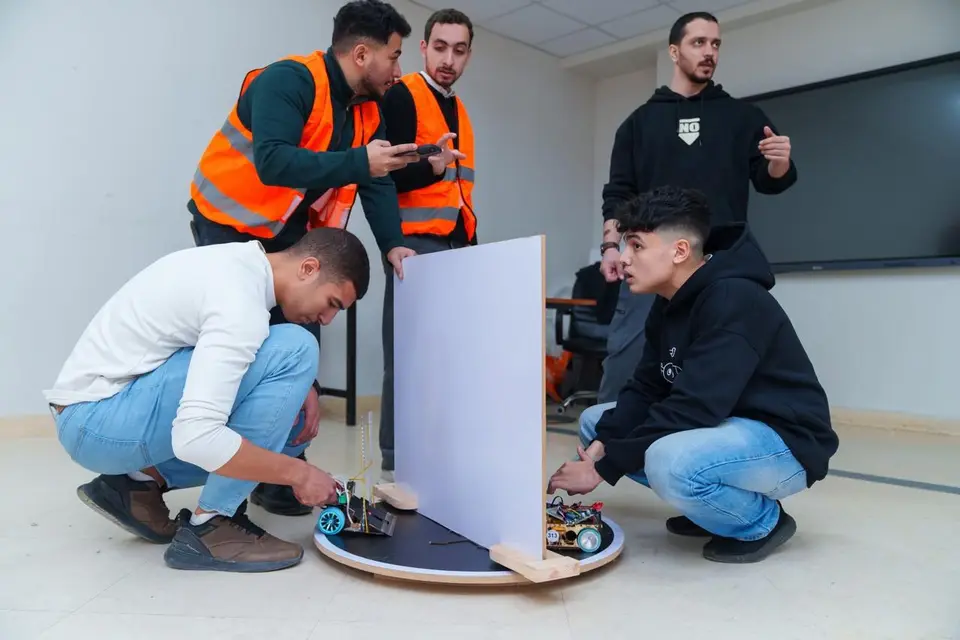
Real students, real robots, real engineers at the front of the room. Footage from our school sessions.
Students drive their first robot
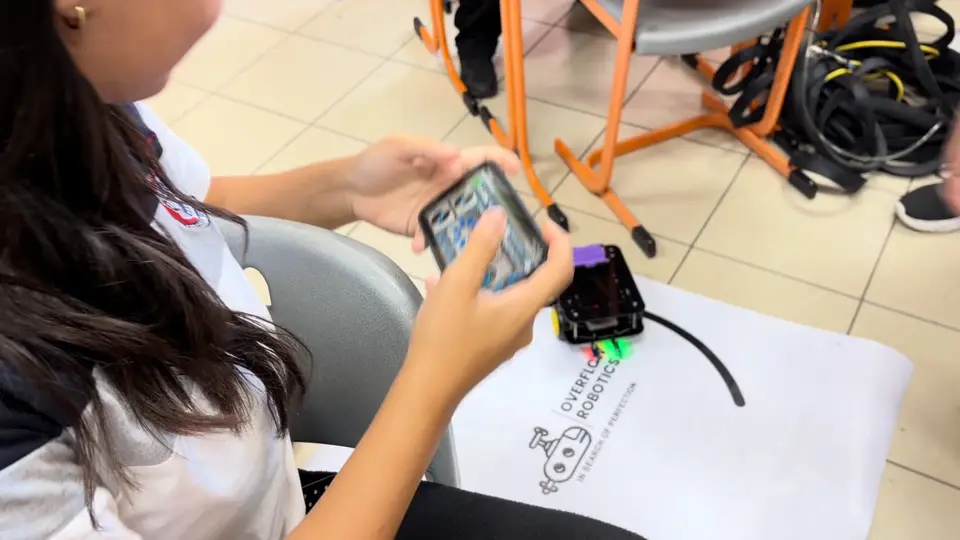
From simulation to real robots
Kick-off talk in the library
Engineers in the classroom
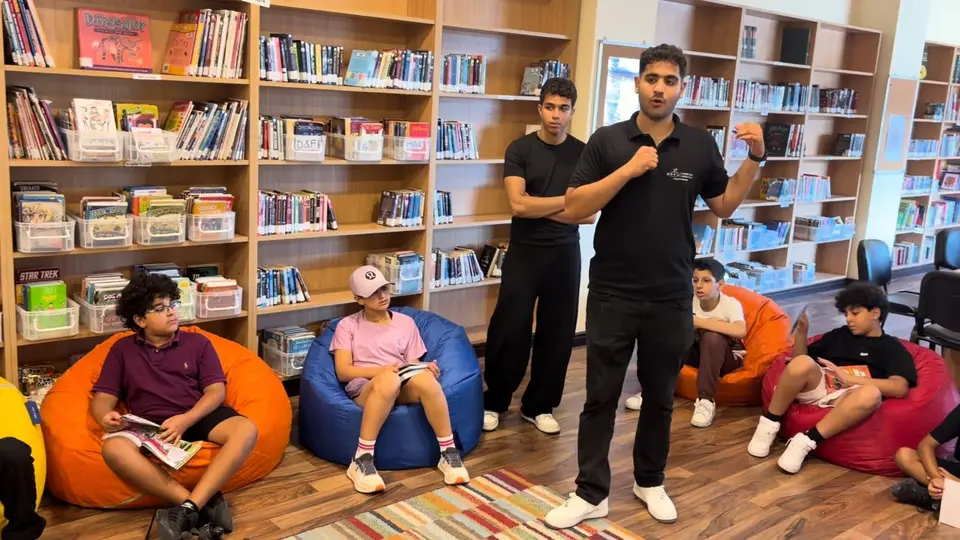
Live demos, hands up, questions
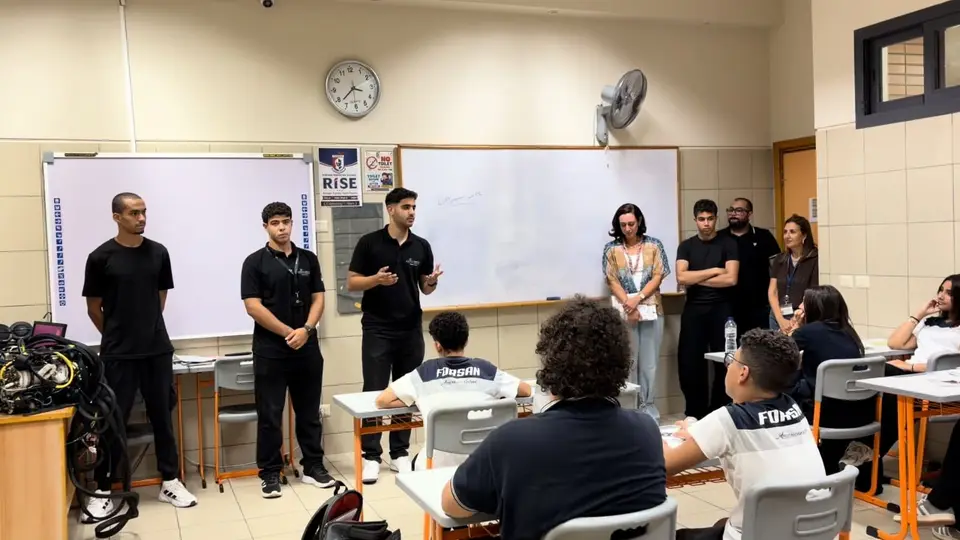
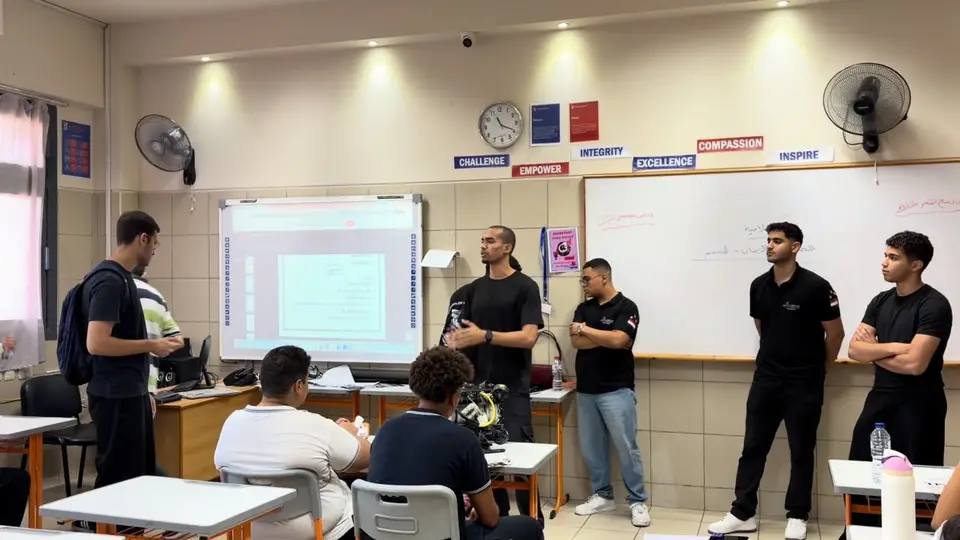
Two ways to join TIS
In your school, or from home.
Same Module 1, same Overflow instructors, same portal. Pick the route that fits your child.
TIS in your school
TIS runs directly inside partner schools. Overflow instructors come to you and students build in teams during the school programme.
- Overflow instructors teach on site
- Students build in small teams — one robot kit per team
- Every student gets their own TIS portal account from us
- Projects, feedback, XP and certificates in the portal
TIS from home
School not a TIS partner yet? Enroll directly: order the Module 1 kit and take the full course through live online sessions.
- The Module 1 robotics kit, delivered to your home
- Live online sessions with an Overflow instructor, plus recordings
- The full portal: submissions, rubric feedback, notebook, XP, badges, certificates
- A parent dashboard for grades, attendance and feedback
- 1
Parent signs up
Parents enroll, not students.
- 2
Add your child
Create their own login.
- 3
Pick a cohort
Pay off-platform; the kit ships to you.
01 — The gap
Egypt educates millions. Industry still can't find job-ready talent.
Egypt runs the largest school system in the region and is investing heavily in skills-based reform. But hands-on engineering experience still reaches very few students — and usually too late.
25.6M
pre-university students in the 2025/26 school year1
21
public STEM schools in the whole country2
~5,000
students enrolled in STEM schools (2023)3
78%
of leading Egyptian companies struggle to find talent with the right skills4
70%
of employers would hire more entry-level talent if it were more job-ready4
16.8%
unemployment among educated youth aged 15–29 (2025)5
The ratio
1 in 5,000
Roughly one Egyptian school student in five thousand sits in a dedicated STEM school. Obour STEM School alone takes about 150 of 30,000 applicants a year.
A
Degrees aren't the bottleneck. Experience is.
In Q3 2025, 43.4% of unemployed Egyptians held a university or postgraduate degree. Employers aren't short of graduates — they're short of graduates who have already worked on real problems.
B
Real work comes too late.
Most students meet a real engineering task for the first time in a final-year internship, if at all. By then their habits, interests and career choices are already set.
C
Edtech fills screens, not workbenches.
Most digital learning delivers content: videos, question banks, tablets. Very little of it puts real tools and real industry problems into a teenager's hands. That's the gap TIS is built to close.
- 1. Pre-university enrolment 2025/26 — Dr. Hossam Badrawi, Al-Hurriya (2026)
- 2. Number of STEM schools — Ahram Online, July 2025
- 3. STEM enrolment, 2023 — Al-Ahram Weekly, January 2024
- 4. Nexford University Egyptian employer survey, via Zawya (2021)
- 5. CAPMAS 2025 labour force data, via Egypt Today, April 2026
02 — Start early
Why start before university?
The habits that make a good engineer — breaking a problem down, testing an idea, learning from failure — are easiest to build while students are still deciding who they want to become.
Better career choices
Students who have actually built and coded something choose their university path from experience, not guesswork.
Habits formed early
Planning, testing and documenting become second nature years before they're graded on them at university.
Resilience
When failure is treated as data, students stop fearing it. They learn to debug code, circuits and their own thinking.
Stronger school results
Physics, maths and programming make more sense once you've seen them move a robot.
A real portfolio
Projects, notebooks, certificates and competition entries that stand out on university and scholarship applications.
Teamwork & communication
Rotating team roles, explaining trade-offs and presenting results — the skills employers say graduates lack.
“Providing the necessary skills to students and trainees to think creatively, and empower them technically and technologically.”
Egypt Vision 2030 · Education pillar
03 — How we teach
Project-based, every session.
No slide lectures. Every session is built around a challenge students solve with their own hands, coached by an engineer.
- 1Hands on the kit within 15 minutes
- 2Students hold the tools, not the instructor
- 3Failure is data
- 4Real engineering habits from day one
- 5Every session ends with something that works
How a session runs
- 1Warm-upRecall question and prediction
- 2Mini-lessonShort live demo of the concept needed
- 3PlanSketch, pseudocode, roles and criteria
- 4BuildStudents wire, code or assemble
- 5Test & improveControlled test, one change, record
- 6Show & tellDemo and explain one decision
- 7ReflectNotebook entry and kit check
If a session runs behind, we cut decoration and extensions — never safety, planning or reflection.
How it works
From first session to certificate.
- 01
Join
Partner-school students join through their school. Anyone else: a parent creates an account, adds their child and picks a cohort.
- 02
Get the kit
In partner schools, each team builds with its own kit in class. Learning from home? The Module 1 kit is delivered to you.
- 03
Build live
With an Overflow instructor — in class at partner schools, or in live online sessions with recordings for revision.
- 04
Submit & get feedback
Photos, video, code, a short quiz and a notebook entry for every project — reviewed against a rubric.
- 05
Your next project
We recommend each student's next project from their results, and the instructor confirms it.
- 06
Certificate
Finish the course to earn a verifiable certificate and a portfolio you can share.
04 — The TIS journey
Not a course. A full applied-engineering journey.
Four phases, from first circuits to competition-grade engineering. Phase 1 is running now — the later phases are still being designed.
Phase 1
Running nowThinking basics & robotics
A working line-follower robot built from scratch; first wiring and coding skills.
Phase 2
Advanced problem solving
Details coming soon
Phase 3
Specialization
Details coming soon
Phase 4
Full applied engineering
Details coming soon
The program goal
Students who can design, build, test and present a complete engineered system — to a real competition standard.
Phase 1 in detail
Module 1 — Robotics & Engineering Foundations
12–17
Ages
46
Contact hours
23 × 2 h
Sessions
Beginner
Level
Capstone
An autonomous line-following robot that detects an obstacle, avoids it, and finds its way back to the route.
Stage A · sessions 1–6
Discover & circuits
The design cycle, safe breadboard circuits, Arduino, digital and analog inputs.
Interactive signal system
Stage B · sessions 7–9
Sense & decide
Calibrating infrared sensors from real readings, decision logic, mechanical design.
Sensor evidence + plan
Stage C · sessions 10–14
Mobile platform
DC motors, H-bridge drivers, PWM and differential drive; assembling and calibrating a 2WD chassis.
Manual mobile robot
Stage D · sessions 15–19
Autonomy
Sensor bars, line-following logic and tuning, ultrasonic obstacle detection and avoidance.
Line follower + avoidance
Stage E · sessions 20–23
Capstone
Ideate, integrate, test and demo the final robot.
Combined autonomous robot
What students will be able to do
- Explain a robot as inputs, processing, outputs, power and structure
- Build low-voltage circuits safely on a breadboard
- Write Arduino code with inputs, outputs, conditions, variables and functions
- Calibrate surface and distance sensors from observed readings
- Explain DC motors, H-bridge drivers, PWM and differential drive
- Tune line-following with three infrared sensors
- Use sketches, pseudocode, test matrices and logs
- Collaborate, explain trade-offs, present and reflect
Teams of four, rotating roles
Every learner handles hardware, code, testing and documentation — one shared kit never means one student does all the work.
The engineering notebook
Think like an engineer, on paper first.
The notebook is at the heart of TIS. For every project, students define the problem, explain their design choices, log the build, record test data — and reflect honestly on what failed and why. Instructors grade it as part of every project.
- 1
Problem
What problem are you solving? What does success look like, and how will you measure it?
- 2
Research
What did you look up or learn before building? Note your sources.
- 3
Design & sketches
What options did you consider? Which did you choose and why? Add sketches or photos.
- 4
Build log
What did you build, step by step? Include dates and photos of progress.
- 5
Testing results
How did you test it? Record what happened — numbers, tables, observations.
- 6
What went wrong
What failed or surprised you, and why do you think it happened?
- 7
What I'd change
If you built it again, what would you do differently?
05 — For the future
Coming soonThe Minor Co-op Program
Real industry tasks for Egypt's next engineers — years before they reach university.
A Minor Co-op is a defined task a partner company gives to TIS student teams. It can be live, upcoming or already solved: the value is in the experience. Students finish it within an agreed time and present it to the company's engineers. It's unpaid, supervised by TIS instructors, and happens before students even reach university.
1
You share a brief
A real task: current, future or already completed.
2
We map it
TIS matches it to a module, track and student level.
3
Teams build
Over a few weeks or a full module.
4
They document
Build logs, test results and a final presentation.
5
You review
Your engineers judge the work and give feedback.
Example briefs (illustrative)
- MechanicalDesign a gripper that picks a part off a moving conveyorCAD model + working prototype
- ElectricalPlan the power and wiring for a battery-powered sensor nodeWiring diagram + test log
- SoftwareWrite line-following and obstacle logic for an indoor delivery cartWorking code + demo run
What students gain
- Real problems from real companies
- Feedback from working engineers
- Portfolio work that proves what they can do
- A head start years before internships
What companies gain
- Costs nothing: no stipend, equipment or office space
- One task brief + one review session
- Meet future talent years before they graduate
- Fresh eyes on familiar problems
- A direct contribution to Vision 2030
| Typical internship | TIS Minor Co-op | |
|---|---|---|
| Student age | University, 20+ | Middle & high school |
| Cost to company | Stipend, supervisor, workspace | None |
| Company time | Weeks of daily supervision | A brief + one review session |
| Talent access | Final-year students | Years earlier, while interests form |
Cost to partner: EGP 0. What we ask: one task brief and one final review.
The TIS portal
Everything in one place — for every role.
Students
- Live session links & recordings
- Project instructions and kit lists
- Submit builds, code and quizzes
- Engineering notebook
- XP, badges, leaderboard, certificates
Parents
- Enroll and track payment & kit delivery
- Grades and instructor feedback
- Attendance record
- Emails for feedback and absences
Instructors
- Schedule sessions, take attendance
- Review queue with rubric scoring
- AI-assisted next-project recommendations
- Deadlines, badges and certificates
For schools
Bring TIS to your school.
We visit schools with live robot demos and mini engineering challenges, and run full programmes on site.
1
Partner school
16
Students enrolled
1
Pilot cohort
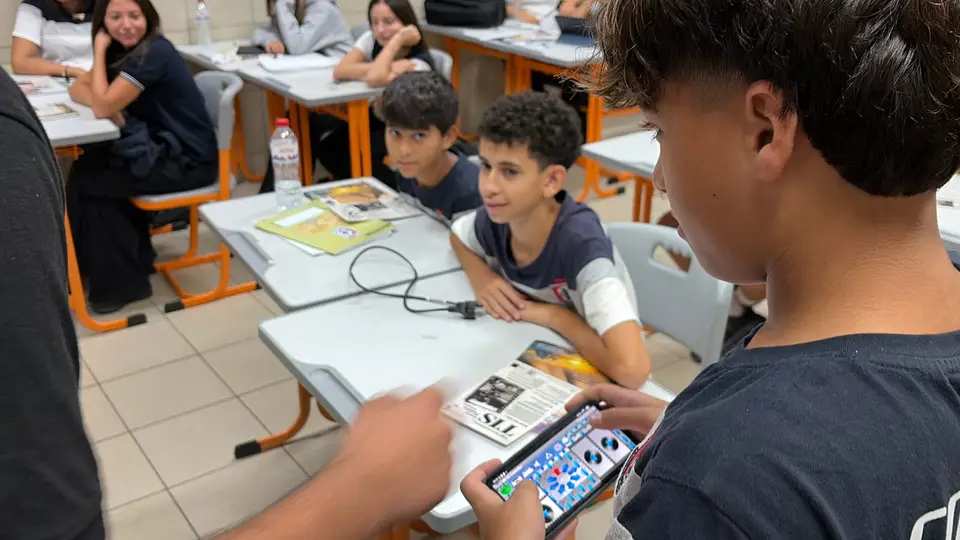
Forsan American School · September 2026
Our first TIS school tour: hands-on robotics demos and mini-challenges for students.
Already a partner school? Create a school account to follow your students' progress.
For schools
Book a free school visit
We bring robots, run a hands-on mini-challenge with your students, and show how TIS fits into your school week.
- Live robot demo by the team that placed 5th in the world
- A mini engineering challenge for your students
- A plan for running TIS at your school — one kit per team
Prefer email? overflowrobotics@gmail.com
Questions
Frequently asked
Does my child need experience?
No. Module 1 starts from zero and adds extension challenges for students who move faster.
My school isn't a TIS partner. Can my child still join?
Yes. Enroll from home: order the Module 1 kit, join live online sessions with an Overflow instructor and use every feature of the TIS portal. You'll need a laptop or computer and a table to build on.
How does TIS work inside a school?
Overflow instructors run the sessions on site. Students work in small teams with one robot kit per team, and every student gets their own TIS portal account from us — no sign-up needed.
How are students assessed?
Each project is reviewed against a rubric — build quality, functionality, code, notebook and engineering reasoning — with written feedback. Parents see grades, attendance and feedback in the portal.
What if my child misses a session?
Every live session is recorded and posted on the course page.
Can our school partner with TIS?
Yes — we run school tours and in-school programmes. Email us to arrange a visit.